{config.cms_name} Trang chủ / Các sản phẩm / Van UPVC/CPVC / SCH8O/DIN UPVC/CPVC Pneumatic Flange Ball Valve
Công ty TNHH Đường ống Zheyi (Vũ Hán), Ltd.
tùy chỉnh SCH8O/DIN UPVC/CPVC Pneumatic Flange Ball Valve Đối với ngành công nghiệp thực phẩm/ô tô/điện tử
SCH8O/DIN UPVC/CPVC Pneumatic Flange Ball Valve

SCH8O/DIN UPVC/CPVC Pneumatic Flange Ball Valve

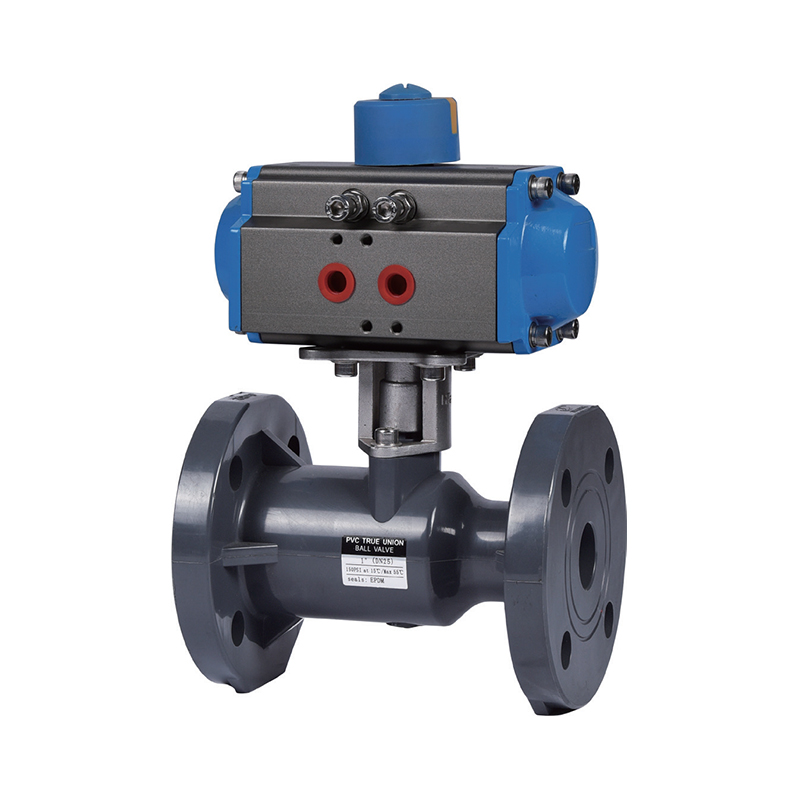
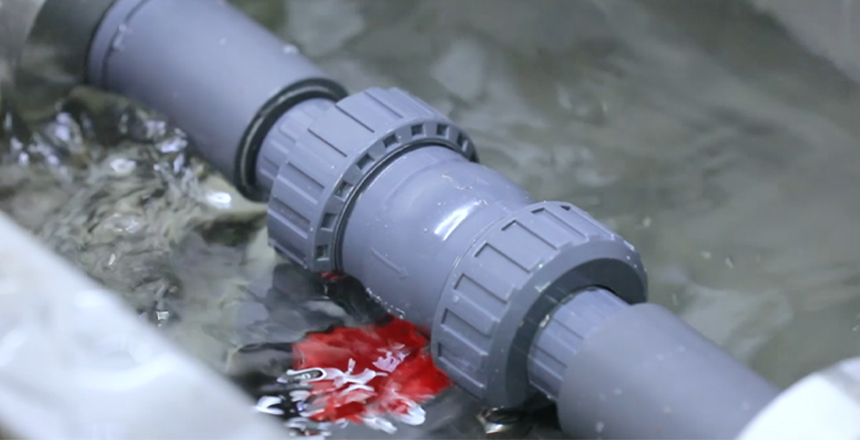
Among all types of valves, the pneumatic flanged ball valve has the fluid resistance. Even the reduced-bore type has relatively low fluid resistance. The valve body of the pneumatic ball valve is equipped with thrust bearings to reduce friction torque on the stem, ensuring smooth and flexible long-term operation. The valve seat offers sealing performance, made from elastic materials like PTFE, which enhances sealing capability as the medium pressure increases. Additionally, the stem sealing is reliable and resistant to damage. Due to the self-lubricating properties of the materials used and minimal friction loss with the ball, the pneumatic ball valve has a long service life. Springs between the ball, stem, and valve body help discharge static electricity generated during switching, ensuring safe usage.

Liên hệ với chúng tôi
tham số ứng dụng Tiêu chuẩn kỹ thuật
  • (1) Material: UPVC, CPVC
    (2) Size: 1"-4", DN25-DN100, DN32-DN110
    (3) Standard: DIN
    (4) Connection: flange
    (5) Work pressure: 150PSI, 1.0MPa
    (6) Operating temperature: UPVC(-10℃-60℃), CPVC(-10℃-90℃)
    (7) Minimum air pressure: 45PSI, 0.4MPa
    (8) Body color: UPVC (dark gray), CPVC (light gray)

    SIZE/NOM.

    dn32

    dn40

    dn50

    dn6e

    dn75

    dn90

    dn110

    dn140

    dn160

    (DN25)

    (DN32)

    (DN40)

    (DN50)

    (DN65)

    (DNB0)

    (DN100)

    (DN125)

    (DN150)

    (1")

    (1-1/4")

    (1-1/2")

    (2")

    (2-1/2")

    (3")

    (4")

    (5")

    (6")

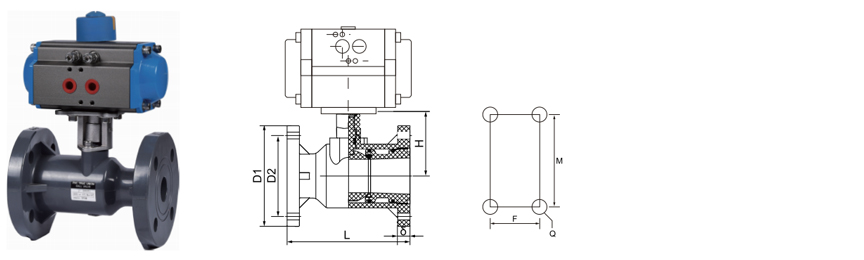
    D1

    115

    140

    145

    165

    180

    195

    220

    250

    285

    D2

    DIN

    85

    100

    110

    125

    145

    160

    180

    210

    240

    ANSI

    79

    89

    98

    121

    140

    152

    191

    216

    241

    JIS

    42.5

    48.5

    61

    73

    90

    105

    132

    158

    186

    N-Φ

    DIN

    4-Φ14

    4-Φ18

    4-Φ18

    4-Φ18

    4-Φ18

    8-Φ18

    8-Φ18

    8-Φ18

    8-Φ18

    ANSI

    4-Φ16

    4-Φ16

    4-Φ16

    4-Φ19

    4-Φ19

    4-Φ19

    4-Φ19

    8-Φ22

    8-Φ22

    JIS

    4-Φ19

    4-Φ19

    4-Φ19

    4-Φ19

    4-Φ19

    8-Φ19

    8-Φ19

    8-Φ23

    8-Φ23

    δ

    16

    18

    18

    20

    20

    25

    25

    27

    29

    F

    -

    -

    -

    -

    45

    45

    49

    49

    49

    M

    40

    52

    52

    70

    84

    84

    121

    121

    121

    Q

    2×M6

    2×M8

    2×M8

    2×M8

    4×M10

    4×M10

    4×M10

    4×M10

    4×M10

    Torque (N ·M)

    4

    6

    8

    12

    18

    26

    35

    Actuator working mode double-acting/single-acting (NC normally closed, NO normally open)

    Specification

    20

    25

    32

    40

    50

    63

    75

    90

    110

    140

    160

    1/2"

    3/4"

    1"

    11/4"

    11/2"

    2"

    2 1/2"

    3"

    4"

    5"

    6"

    Controlling stress

    4~8

    NAMUR standard air source interface

    G  1/4"

    Double acting actuator models

    TBN032D

    TBN032D

    TBN032D

    TBN052D

    TBN052D

    TBN63D

    TBN75D

    TBN83D

    TBN92D

    TBN105D

    TBN125D

    Single acting actuator models

    TBN052SK

    TBN052SK

    TBN052SK

    TBN063SK

    TBN063SK

    TBN75SK

    TBN83SK

    TBN92SK

    TBN105SK

    TBN125SK

    TBN140SK

SCH80 / DIN · PNEUMATIC · FLANGED
UPVC / CPVC Pneumatic Flange Ball Valve
Double-acting · Spring-return · Full port · Flanged ends
The SCH80/DIN UPVC/CPVC Pneumatic Flange Ball Valve is an automated quarter-turn isolation valve engineered for remote on-off and throttling control in corrosive and high-purity fluid systems requiring flanged connections. Manufactured to ASTM SCH80 and DIN standards, this valve integrates a pneumatic actuator with a flanged one-piece or two-piece ball valve body. The actuator is available in double-acting or spring-return configurations, providing fail-safe positioning. The full port design maintains line flow characteristics with minimal pressure drop. The flanged ends comply with DIN PN10/PN16 or ANSI Class 150 drilling patterns, enabling direct integration into existing flanged piping systems without adapters. PTFE seats and seals deliver bubble-tight shut-off. The actuator mounting follows ISO 5211 standards. This valve is widely used in automated process control, chemical dosing, water treatment, and industrial manufacturing systems where flanged connections are required for secure, leak-proof installation.
DN15–DN100 Size range
PN10–PN16 Pressure rating
–20°C to 93°C CPVC range
ISO 5211 Mounting pad
Flanged Connections
DIN PN10/PN16 or ANSI Class 150 flanges provide secure, leak-proof integration into existing piping systems without additional adapters.
Automated Operation
Double-acting or spring-return actuators enable remote control, process automation, and fail-safe positioning without operator intervention.
Bubble-Tight Shut-Off
PTFE seats provide a reliable seal against the chrome-plated or solid CPVC ball, ensuring zero leakage across the full pressure range.
Chemical & Thermal Resistance
UPVC and CPVC bodies resist acids, bases, and salts. CPVC extends service to 93°C for hot corrosive media.
Valve Specifications
Body UPVC · CPVC
Ball Chrome-plated brass · Solid CPVC
Seats PTFE · EPDM (optional)
Flange standard DIN PN10/PN16 · ANSI Class 150
Face-to-face DIN EN 558 Series 1
Standards ASTM D2467 · DIN 8061/8062 · ISO 16139
Actuator Data
Type Double-acting · Spring-return
Supply pressure 4–8 bar
Mounting ISO 5211 · Direct mount
Rotation 90° · Adjustable stroke
Accessories Positioner · Limit switches · Solenoid
Actuator sizing depends on valve torque and supply pressure. Consult factory for selection.
Application Areas
Chemical Automated acid dosing · Reactor feed control · Transfer lines
Semiconductor UPW distribution · Chemical delivery · Wet bench supply
Energy Battery electrolyte · Cooling water · Solar cell etching
Water Wastewater · RO permeate · Desalination · Pump discharge
Pharma DI water loops · CIP systems · Sanitary process lines
Automotive Paint circulation · Parts washing · Coolant systems
Installation Guidelines
  • Flange connections: Use full-face EPDM or PTFE gaskets. Torque bolts evenly in cross pattern to 15–20 Nm.
  • Actuator mounting: Ensure ISO 5211 mounting pad alignment. Use correct coupling and bracket.
  • Air supply: Filtered, lubricated air at 4–8 bar. Use solenoid valve for remote control.
  • Orientation: Install with actuator in accessible position. For horizontal lines, stem should be vertical.
  • Testing: Cycle valve manually and pneumatically before placing in service.
  • Periodic maintenance: Inspect flange bolts and gaskets annually. Cycle valve quarterly to prevent seat sticking.
Critical Restrictions
  • Temperature: UPVC 60°C max · CPVC 93°C max. Do not exceed seat and gasket ratings.
  • Air pressure: Do not exceed 8 bar supply pressure. Actuator torque increases with pressure.
  • Not rated for steam service. Avoid rapid thermal cycling and pressure surges.
  • Do not use with concentrated nitric acid (>15%) in UPVC bodies.
  • Flange bolts: Do not overtighten — cracking risk above 22 Nm for DN80 .
  • UV exposure: Use UV-stabilized material or apply protective coating for outdoor installations.
  • Actuator storage: Protect from moisture and debris. Store in clean, dry area.
Frequently Asked Questions
What flange standards are available?
The valve is available with DIN PN10/PN16 flanges (per DIN 2501) or ANSI Class 150 flanges. DIN flanges are standard for European and metric piping systems. ANSI flanges are available for North American and imperial systems. Specify the flange standard when ordering.
What is the difference between double-acting and spring-return actuators?
Double-acting actuators require air pressure to both open and close the valve. Spring-return actuators use air to open and a spring to close (or vice versa), providing fail-safe positioning in case of air supply loss. Spring-return is preferred for emergency shutdown applications.
What air pressure is required for operation?
The actuator requires filtered, lubricated air at 4–8 bar. Lower pressures may result in insufficient torque for reliable operation. Higher pressures may exceed actuator torque rating and damage the valve stem. Always verify with the actuator torque chart.
Can this valve be used for throttling control?
Yes, with a positioner and appropriate control signal (4–20 mA or 0–10 V). The pneumatic actuator provides proportional positioning, enabling accurate flow control. However, throttling service may reduce seat life compared to on-off service.
What accessories are recommended?
Common accessories include solenoid valves for remote on-off control, positioners for throttling, limit switches for position feedback, and filter-regulator-lubricator units for air preparation. Accessory selection depends on the application and control system requirements.
Công ty
Công ty TNHH Đường ống Zheyi (Vũ Hán), Ltd.

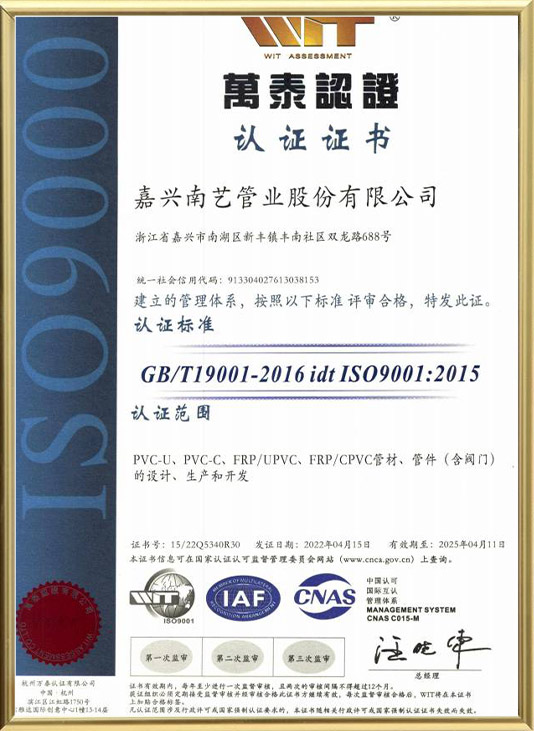
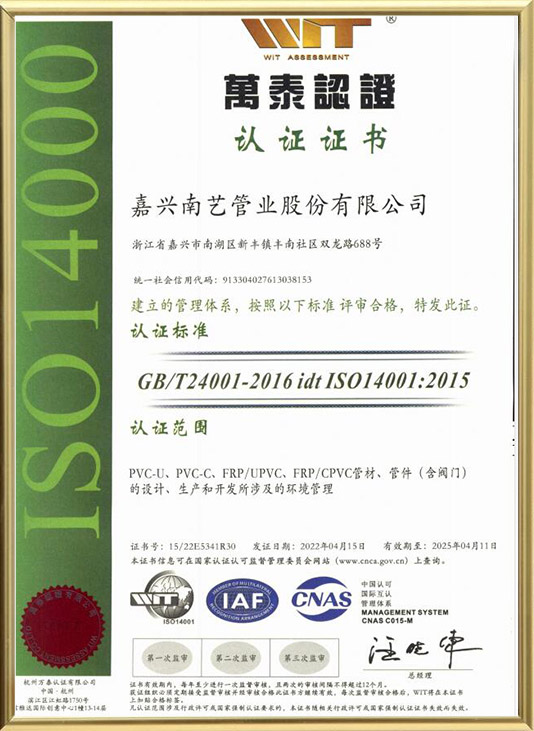
ZHEYI Group Đúng Trung Quốc SCH8O/DIN UPVC/CPVC Pneumatic Flange Ball Valve Đối với ngành công nghiệp thực phẩm/ô tô/điện tử nhà cung cấptùy chỉnh SCH8O/DIN UPVC/CPVC Pneumatic Flange Ball Valve Đối với ngành công nghiệp thực phẩm/ô tô/điện tử nhà máy. Chúng tôi được thành lập vào năm 2007, tập trung vào nghiên cứu và phát triển, sản xuất, bán hàng và dịch vụ ống công nghiệp CPVC và UPVC. Công ty đã đạt được một số chứng nhận, bao gồm giấy phép sản xuất thiết bị đặc biệt, giấy phép vệ sinh sản phẩm liên quan đến nước của Tỉnh Chiết Giang, chứng nhận hệ thống quản lý chất lượng IS09001, chứng nhận hệ thống quản lý môi trường IS014001 và chứng nhận hệ thống quản lý an toàn và sức khỏe nghề nghiệp IS045001. Công ty có hơn 50 quyền sở hữu trí tuệ độc lập và quyền xuất nhập khẩu tự vận hành. Để cung cấp các sản phẩm đa dạng và dịch vụ tốt hơn, công ty đã giới thiệu công nghệ tiên tiến, thiết bị gia công và nguyên liệu thô và hệ thống quản lý độc đáo từ Đức và Hoa Kỳ. Trong những năm qua, các sản phẩm của chúng tôi đã được sử dụng rộng rãi trong vận chuyển đường ống chất lỏng axit và kiềm, nước siêu tinh khiết, nước uống, nước tinh khiết cấp điện tử và nước thải công nghiệp trong các ngành công nghiệp hóa chất, luyện kim, quang điện, điện hạt nhân, pin lithium, chất bán dẫn điện tử, thực phẩm, y học, ô tô, xử lý nước công nghiệp và các ngành công nghiệp khác. Hiện nay, Tập đoàn ZHEYI đã thành lập hơn 30 công ty bán hàng trên toàn quốc và tất cả các loại sản phẩm đều được xuất khẩu sang Châu Âu, Châu Mỹ, Đông Nam Á và các quốc gia, khu vực khác, được khách hàng trong và ngoài nước ưa chuộng sâu sắc.
Giấy chứng nhận danh dự
  • ISO 9001: 2015
  • ISO 14001: 2015
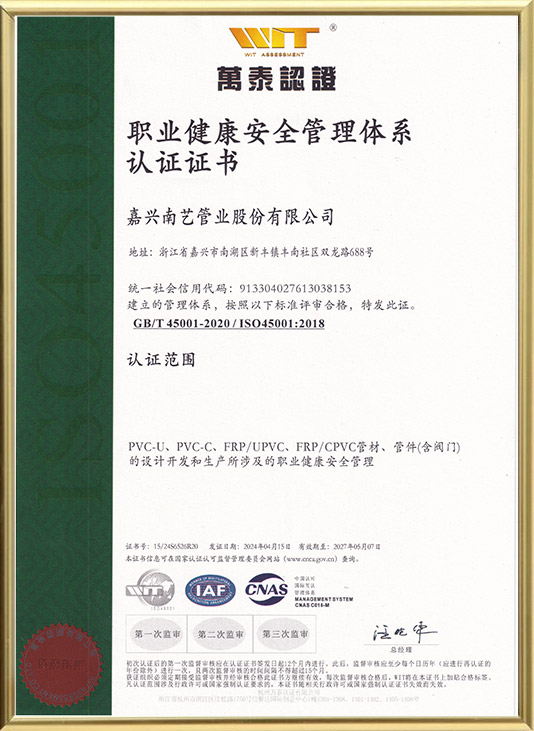
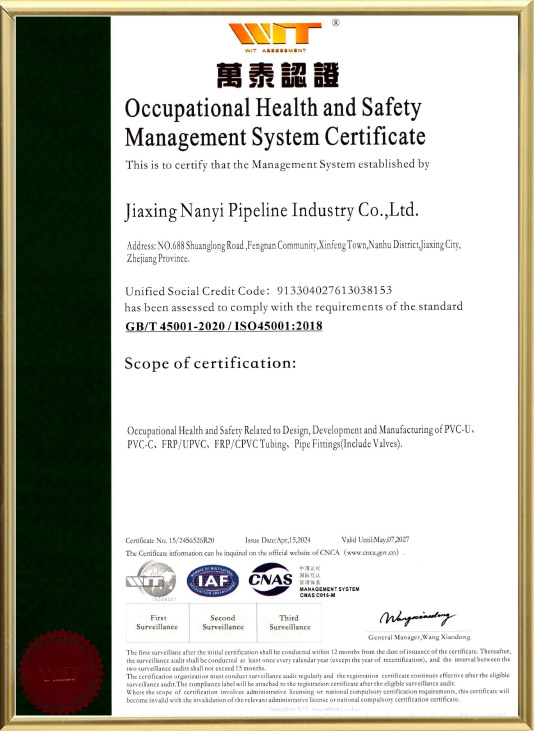
  • ISO 45001: 2018
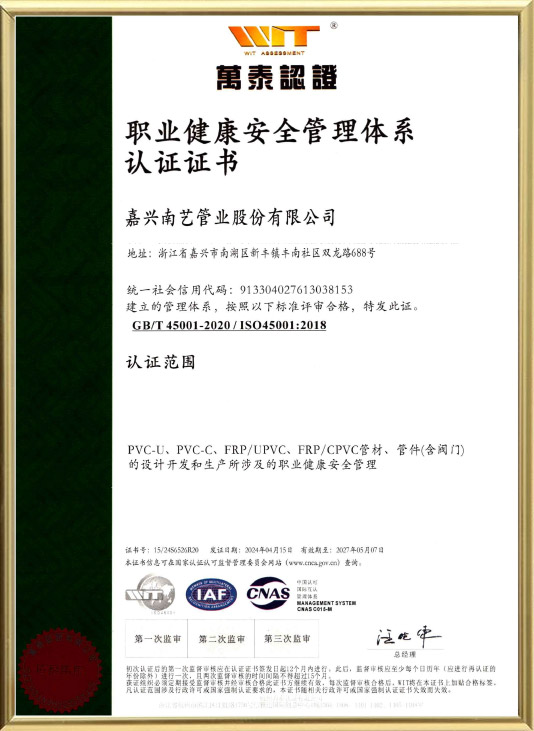
  • ISO 45001: 2018
  • ISO: 45001-2018 en
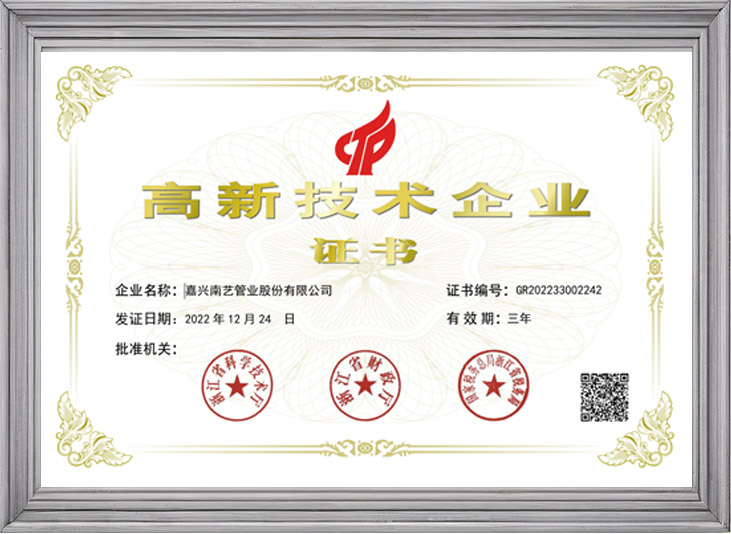
  • Doanh nghiệp công nghệ cao quốc gia
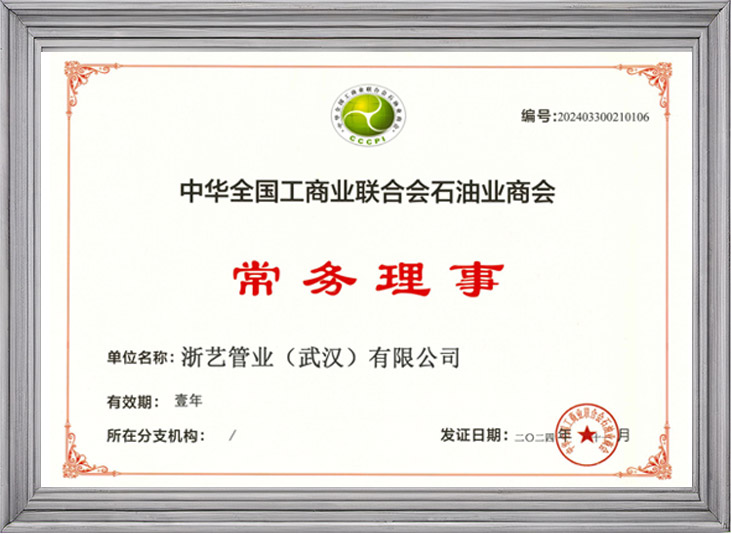
  • Giấy chứng nhận
Tin tức
Để lại tin nhắn
  • Công ty TNHH Đường ống Zheyi (Vũ Hán), Ltd.
    Kiểm soát chất lượng nghiêm ngặt

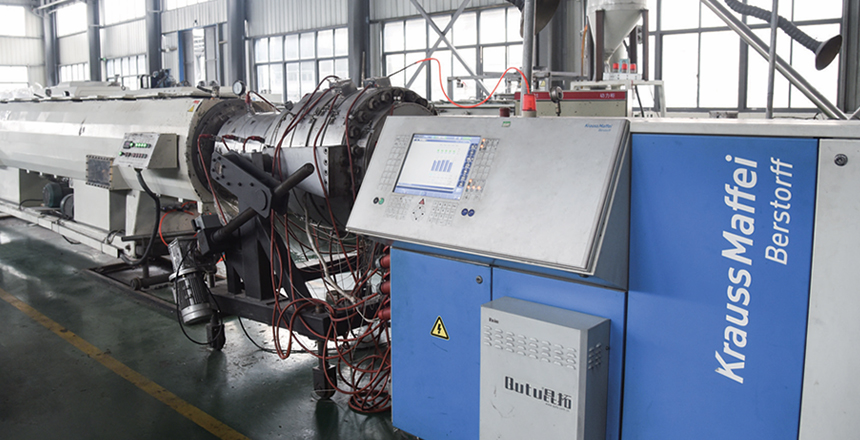
    Tập đoàn ZHEYI tuân thủ nguyên tắc "chất lượng là trên hết", sử dụng thiết bị tiên tiến quốc tế và nguyên liệu thô chất lượng cao, kiểm soát chặt chẽ mọi khâu sản xuất và cam kết cung cấp các sản phẩm đường ống có hiệu suất tuyệt vời và vẻ ngoài tinh tế.

    Công ty sử dụng thiết bị sản xuất tiên tiến nhất và vật liệu chất lượng cao, bao gồm Sekisui của Nhật Bản và Lubrizol của Hoa Kỳ. "ZHEYI" kết hợp hoàn hảo công nghệ sản xuất tinh tế với quản lý chuyên nghiệp và mỗi sản phẩm đều trải qua quá trình kiểm soát chất lượng nghiêm ngặt - từ sản xuất, kiểm tra đến giao hàng cuối cùng, đảm bảo sự kết hợp hoàn hảo giữa vẻ ngoài và chức năng.

  • Công ty TNHH Đường ống Zheyi (Vũ Hán), Ltd.
    Kiểm tra hiệu suất chính xác
    Tại ZHEYI, mọi sản phẩm đều được chế tác tỉ mỉ, không chỉ chú trọng vào thiết kế thẩm mỹ tinh tế mà còn luôn cam kết về chất lượng nội tại tuyệt vời. Kiểm tra hiệu suất nghiêm ngặt đảm bảo sản phẩm có thể duy trì độ ổn định và độ bền ngay cả trong điều kiện khắc nghiệt.:

    ● Kiểm tra mật độ: Đo mật độ vật liệu để đảm bảo tính đồng nhất và ổn định của cấu trúc.
    ● Thử nghiệm nhiệt độ làm mềm Vicat: đánh giá mức độ làm mềm của vật liệu trong điều kiện nhiệt độ cao để đảm bảo khả năng chống biến dạng của sản phẩm trong nhiều môi trường khác nhau.
    ● Kiểm tra lò nướng: mô phỏng khả năng chịu nhiệt lâu dài và xác minh khả năng chịu nhiệt độ cao trong thời gian dài của sản phẩm.
    ● Thử nghiệm thủy tĩnh: Đánh giá độ bền của đường ống trong điều kiện áp suất cao để đảm bảo độ an toàn và độ tin cậy của sản phẩm.
    ● Thử nghiệm va đập bằng búa thả: Kiểm tra khả năng chống va đập của sản phẩm trong quá trình vận chuyển, lắp đặt và sử dụng hàng ngày.

SCH8O/DIN UPVC/CPVC Pneumatic Flange Ball Valve Kiến thức ngành

Common fault diagnosis and maintenance practices of pneumatic flange ball valves (multi-industry application scenarios)

Pneumatic flange ball valves are widely used in safe drinking water, metallurgy, photovoltaics, nuclear power, electronic semiconductors, medicine, industrial water treatment, industrial wastewater and other fields due to their fast opening and closing, good sealing, and high pressure resistance. However, in long-term operation, failures may occur due to medium characteristics, working conditions or improper operation. The following are common problems and maintenance suggestions, which are analyzed in combination with different industry scenarios:

1. Common fault diagnosis and solutions
Valve internal or external leakage
Possible causes: wear of the sealing ring (such as long-term high temperature aging of PTFE), damage to the valve seat, and loose flange bolts.

Industry application differences:
Medicine/electronic semiconductor: High-purity media require zero leakage, and the valve seat material needs to be checked regularly (such as PPL reinforced polytetrafluoroethylene).
Nuclear power/industrial wastewater: Corrosive media (such as acid and alkali) are easy to corrode the valve body, and Hastelloy or fluorine-lined valves should be used.

Pneumatic actuators are slow or fail
Possible reasons: insufficient air source pressure, solenoid valve failure, water accumulation in the cylinder (compressed air is not dry).

Industry application differences:
Photovoltaic/metallurgy: High temperature environment causes more condensed water in the air source pipeline, and an air dryer needs to be installed.
Safe drinking water: Humid environment may cause actuator corrosion, and IP67 protection level is recommended.

Valve stuck or unable to switch
Possible reasons: medium crystallization (such as salt in industrial wastewater), impurity accumulation (such as silt in water treatment), long-term lack of maintenance.

Industry application differences:
Industrial water treatment: Rinse the valve cavity regularly to prevent particulate matter from blocking.
Electronic semiconductors: Metal ion contamination should be avoided in ultrapure water systems, and fully lined valves are recommended.

2. Targeted maintenance practices
Regular inspection and cleaning
Safe drinking water/pharmaceutical industry: Disassemble and inspect seals every quarter to ensure that there is no biofilm or chemical residue.
Photovoltaic/semiconductor: Use high-purity nitrogen to purge the gas line to prevent particle contamination.

Lubrication and sealing management
Metallurgy/nuclear power: Use high-temperature resistant grease (such as silicone-based grease) under high-temperature conditions to avoid dry friction.
Industrial wastewater: In corrosive media environments, it is recommended to use bellows graphite packing for double protection of valve stem seals.

Pneumatic system maintenance
Common to all industries:
Check the gas source triplex (filter, pressure reducing valve, oil mist collector) to ensure stable pressure (usually 0.4~0.6MPa).
Solenoid valves and limit switches must be dust-proof and moisture-proof, especially for outdoor environments of photovoltaic plants.

3. Special precautions for the industry
Nuclear power: Must comply with ASME III or RCC-M standards, and the valve body material must be radiation-resistant (such as 316L ultra-low carbon stainless steel).
Electronic semiconductors: Electrolytic polishing (Ra≤0.4μm) of the surface of the valve in contact with the medium to prevent particles from falling off.
Medicine: Under sterilization (SIP/CIP) conditions, the valve must withstand high-temperature steam cycles above 120°C.

Đừng bỏ lỡ! Liên hệ với chúng tôi để biết tin tức mới nhất!
send